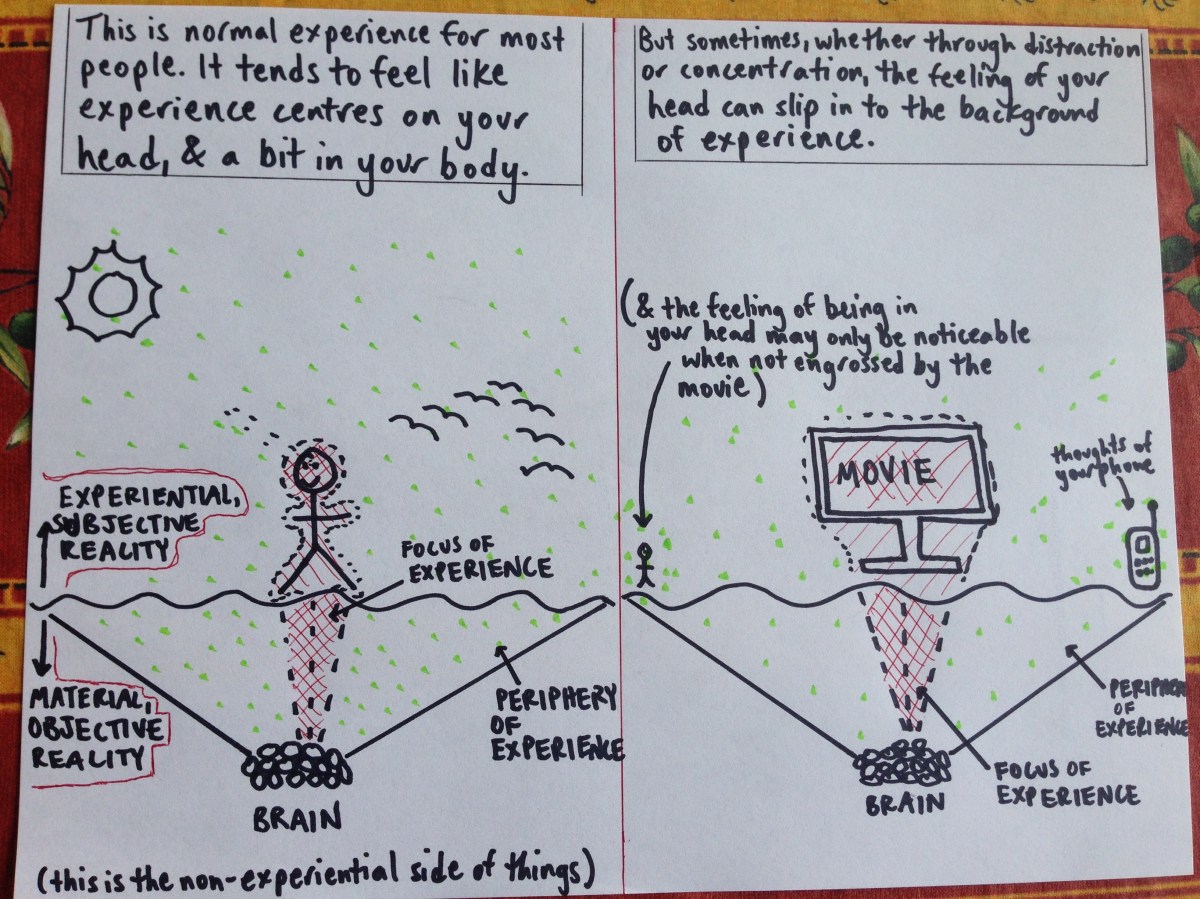
What’s the Point of Consciousness?

“If a general theory of reality has no place for consciousness, then that theory cannot be true.” – Philip Goff, Galileo’s Error

“Consciousness is also nature.” – Guy Armstrong, Emptiness

Two Views of Mind

Science has shown, time and again, that the workings of our world are rarely intuitive. We inhabit a universe with no centre, where time passes relative to motion, nothing can travel faster than the speed of light, and half the cells in our bodies aren’t even human. At the frontiers of knowledge, common sense holds no sway.

Continue reading “What’s the Point of Consciousness?”
The Logic of Rebirth and Karma

“Offered to us as the irreplaceable means of deliverance, the Dhamma does not seek mere intellectual assent, but commands a response that is bound to be fully religious.” – Bhikkhu Bodhi, Two Faces of the Dhamma

“Why, if experience continues anyway, is it so terribly important that it continue within this set of personal characteristics, memories, and body?” – Tom Clark, Death, Nothingness, and Subjectivity

Strange Relics

When I started meditating, ten-odd years ago, I didn’t think much of Buddhism. Whenever neuroscientists wrote about the absence of a solid self, I was intrigued. When Alan Watts waxed lyrical about the ideological assumptions underpinning materialism, I was enthralled. But when Buddhists spoke of the Four Noble Truths, the Noble Eightfold Path, or the Three Characteristics, I glazed over. Even though Buddhism was the primary source of my newfound interest in spirituality, it often read like a painfully detailed way of stating the obvious in dry, arcane terminology.

Continue reading “The Logic of Rebirth and Karma”

How to Have a Good Meditation Retreat: In Theory and Practice

If you practice for a result, then it becomes a hindrance.” – Dipa Ma (common advice to students)

“What is important is not the experiences we have but how we get transformed by them.” – Sayadaw U Jagara (recounted by Joseph Goldstein in Reflections on Nibbana)

Thwarted Desires

In Buddhism, there’s a saying that the path is “good in the beginning, good in the middle, good in the end.” Upon starting a meditation practice, many of us notice surprising benefits. Encouraged by these benefits, we may then seek to take the practice further, setting aside days, weeks, or months to retreat from the world, dedicate ourselves to meditation, and reap the fruits of deep stillness.

Continue reading “How to Have a Good Meditation Retreat: In Theory and Practice”

Delusion and the Useful Futility of Defining Meditation

“Our lives are lived in two realms – the physical and the narrative.” – Will Storr, The Unpersuadables

Misled by Nature

It’s easy to feel high and mighty about our place in the animal kingdom. Despite the physical prowess and surprising ingenuity of our animal cousins, we can’t help but regard them with some degree of pity. Sure, it’s impressive that leafcutter ants farm fungi (and have done so for millions of years), that some birds can fly over 10,000km without stopping, and that male emperor penguins incubate eggs for two months in frigid darkness, but isn’t it also a bit … meaningless?

Continue reading “Delusion and the Useful Futility of Defining Meditation”

Why Things Don’t Exist (or A Very Western Interpretation of Emptiness)

“It is not clear that the universe is a thing, and if it is defined as a set of things it runs the risk of paradox.” – Paul Davies, God and the New Physics

“The thought of your mother is not your mother.” – Joseph Goldstein (restating words spoken by his teacher, Anagarika Munindra)

Holding Reality In Mind

Until Pythagoras and Parmenides, we believed the Earth was flat. Until Copernicus and Kepler, we believed we were at the centre of the universe. Until Darwin and Wallace, we believed that humans were perfectly crafted divine creations. Throughout human existence, we’ve consistently believed in models of reality that have been proven wrong. How is this possible?

Continue reading “Why Things Don’t Exist (or A Very Western Interpretation of Emptiness)”

Vipassana with SN Goenka: Pros & Cons

aaron-blanco-tejedor-VBe9zj-JHBs-unsplash

Do not meditate to get the right attitude—get the right attitude, then you’re meditating.” – Tuck Loon, Cambodian meditation teacher

Meditate to understand, not ‘because of gong’.” – paraphrasing Sayadaw U Tejaniya, Burmese monk

My First Retreat

In 2015 I attended my first meditation retreat, at a small centre on the prairies of eastern Alberta. Going in, I knew what to expect: ten days of total silence, physical pain, and little to eat. In this sense I was more prepared than some of my fellow meditators. Basil, a University of Alberta medical student, was shocked to learn that he’d just signed up for ten dinner-free nights. Hino, an Eritrean immigrant living in Fort McMurray, didn’t know that we would have to give up our phones. Hearing Basil ask others whether they knew about the no-dinner policy, and watching Hino flaccidly protest the removal of his phone privileges, I felt a bit smug. The retreat hadn’t even begun and people were already suffering. Continue reading “Vipassana with SN Goenka: Pros & Cons”

Rethinking Death

dikaseva-34881-unsplash“Why should I be frightened of dying? There’s no reason for it—you’ve got to go sometime.” — Pink Floyd, The Great Gig in the Sky

 Morbid Metaphors

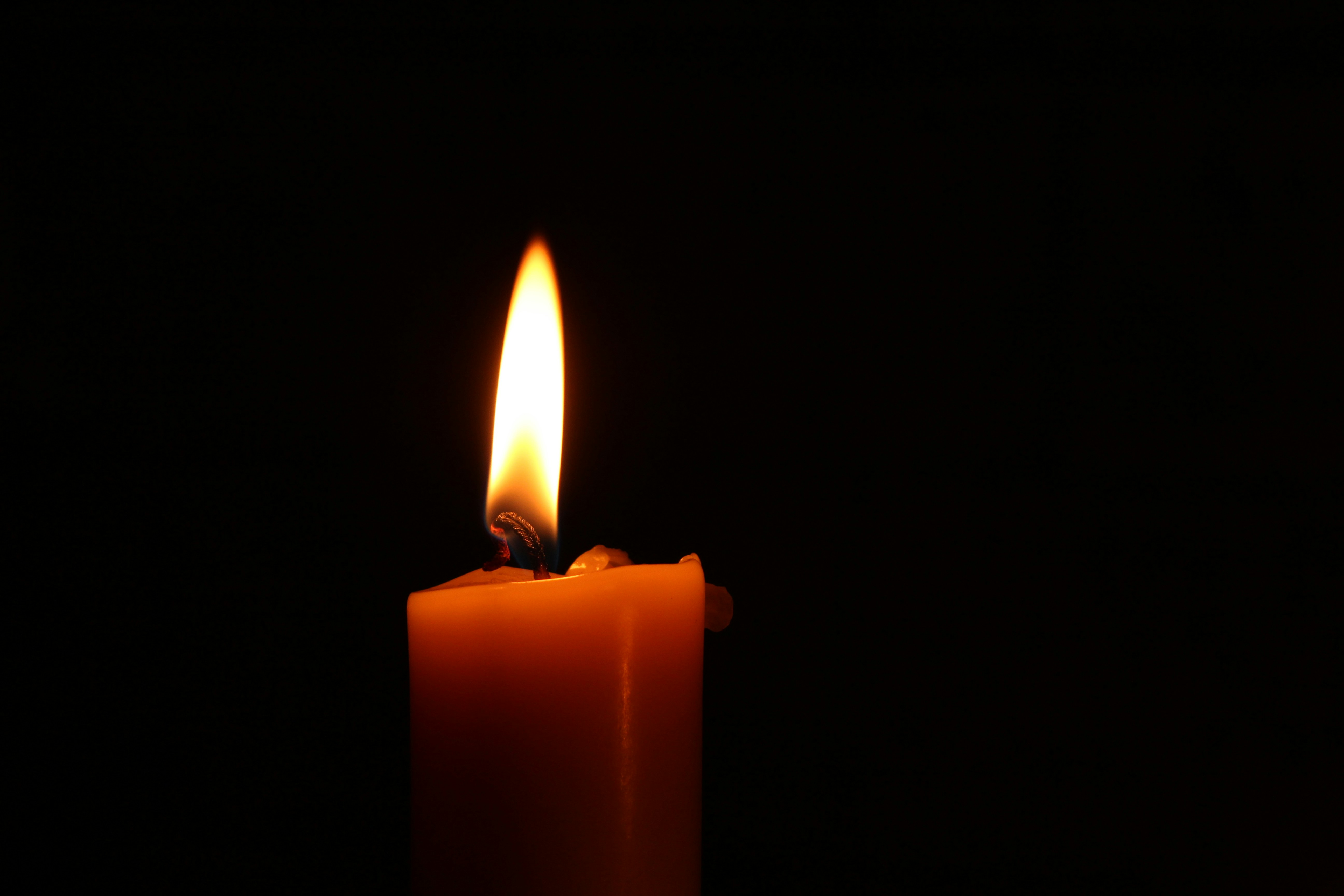
Life is often compared to a burning candle whose luminosity is bookended, past and future, by eternal darkness. At first blush, this metaphor seems apt: consciousness comes into existence, illuminates a lifetime of experience, then dissolves, replaced by the abyss whence it came. But such a comparison is wrongheaded, emblematic of prevailing attitudes towards death which are unimaginative and unduly negative. Continue reading “Rethinking Death”

Why Bother Meditating?

ryan-tang-273377-unsplash.jpg“Though the world is torn and shakenEven if your heart is breakin’It’s waiting for you to awakenSomeday you willLearn to be still.”—Eagles, Learn to Be Still

 An Unsatisfying Present

Throughout life, we are conflicted about the present moment. As children, we long for the freedom of adulthood; as adults, we envy the carefree ease of childhood. Whether romanticising the past or exalting the future, we often wish to be someplace other than here, now.

Continue reading “Why Bother Meditating?”

The Importance of Awareness

“And yet I think also that if even we today could acquire the knack of maintaining undistracted consciousness between coffee breaks, we too might find that we possessed angelic talents, powers, and skills.” – Joseph Campbell

“The truth about us is sobering: We have been playing with our smartphones while hurtling toward the abyss…” – Sam Harris, Trump in Exile

The Decline of Attention

Human flourishing depends on many mental and physical attributes: dexterous hands, abstract thought, language, and social bonds. If any of these vanished on a large scale, our quality of life would decline. Most of these foundations of human achievement remain intact—but one mental faculty essential to progress is in alarming decline. Continue reading “The Importance of Awareness”

Who’s in Control?

“The inner man has been created in the image of the outer.” – BF Skinner

“We live our lives, as it were, ‘inside out’, projecting the existence of an ‘I’ as separate from an external world which we try to manipulate to gain satisfaction.” – Namkhai Norbu

Introduction

Until better explanations became available, humans personified nature to explain its workings: gods with human looks and emotions have been invoked across cultures as causes behind natural processes, it was once believed that sperm housed little humans, and the mental faculty of foresight is often attributed to blind evolutionary processes that cannot anticipate future states. Fortunately, the scientific method has usurped much of the personified description of nature. Though we’ve realized personification’s inadequacy at explaining natural processes, the common understanding of our inner mental lives – themselves natural processes – hinges upon personification. We wrongly invoke personae (aka “selves”) as the causes behind human behaviour.[1] This oversimplification neglects the formative role of the environment on actions and mental states.

Continue reading “Who’s in Control?”